Article from the Handelsblatt Journal Security and Defense
Every war is an innovation engine – and this engine is running at full throttle in Ukraine: from acquisition to order for the prototype, seven days; to frontline testing, seven weeks; and to delivery, seven months. In Germany, by contrast, an arms project can easily take seven years.
Most German companies supplying the Ukrainian armed forces are SMEs – flexible, innovative, and quality-conscious. They range from tech startups and defense suppliers becoming OEMs here, to medium-sized companies from the automotive industry. These are companies that weren't involved in the defense sector five years ago, or didn't even exist. They recognized that a breach had opened in the traditionally high barriers to entry in the Ukrainian defense market – and they are taking advantage of it.
Three critical success factors: presence, presence, presence
These companies have a presence within the armed forces; they understand the armed forces, their tasks and operational principles, their logistics, and their system landscape. They learn about the specific requirements on-site, test their products there, deliver them, and provide training.
They have a presence in Ukraine through an operational facility. Whether through a branch, a new company, an acquisition, or a joint venture – this is the only way to leverage the location's advantages: low labor costs, virtually no lengthy certification processes, and flexible supply chain design. Based on these advantages, the relocation of the value chain is tailored to each individual case.
Finally, an experienced Ukrainian representative, from the military, bureaucracy, or industry, who knows the entire procurement structure from the inside and is present within it. He accompanies the offer that a government agency or command authority has received from his company through the bureaucracy until it reaches the Minister of Defense.
Business development beyond ammunition, drones or AI
Ukraine has created a digital twin of its wartime equipment and is seeking German companies to develop products and services for Ukraine based on it. The Ukrainian 80% assault rifle still contains Soviet-era technology – with obvious implications for spare parts supply. Along the value chain, from reverse engineering and 3D printing to machining, there are numerous business opportunities for industrial companies.
Ukraine was once an arms manufacturing hub for the Soviet Union. It possesses significant defense industry capacity – just not on par with Western manufacturing technology. There is considerable potential here to develop factories capable of supplying the growing Western market.
How do you secure such contracts? The same way as with any international business. Start your research from your desk. Ukraine is very transparent online regarding business opportunities for German companies and its military procurement practices.
Brave 1, a combination of incubator and supplier portal, is the best-known and most responsive access point to Ukrainian arms procurement, particularly in the high-tech sector. Register your services there. You will always receive a response and subsequently be put in touch with contacts in industry and the armed forces.
The traditional export helpers now all possess expertise on Ukraine and arms: Germany Trade and Invest, the associations, the German-Ukrainian Chamber of Industry and Commerce in Kyiv, and last but not least, the Federal Office for Economic Affairs and Export Control, all assist with finding partners, initiating business relationships, and ensuring legal certainty.
Security policy interests intersect with German economic interests
This war could only break out because there is no longer a conventional balance of power in Europe. Ukraine's legitimate self-defense is buying us time to restore it.
By providing them with material support, we create industrial capacity that we urgently need. If your company is about to enter the defense industry, is already active in it, or is firmly established there: Take advantage of the low market entry barriers in Ukraine. Today you are helping Ukrainians defend their homeland – and tomorrow you may be helping the German Armed Forces defend our common homeland.
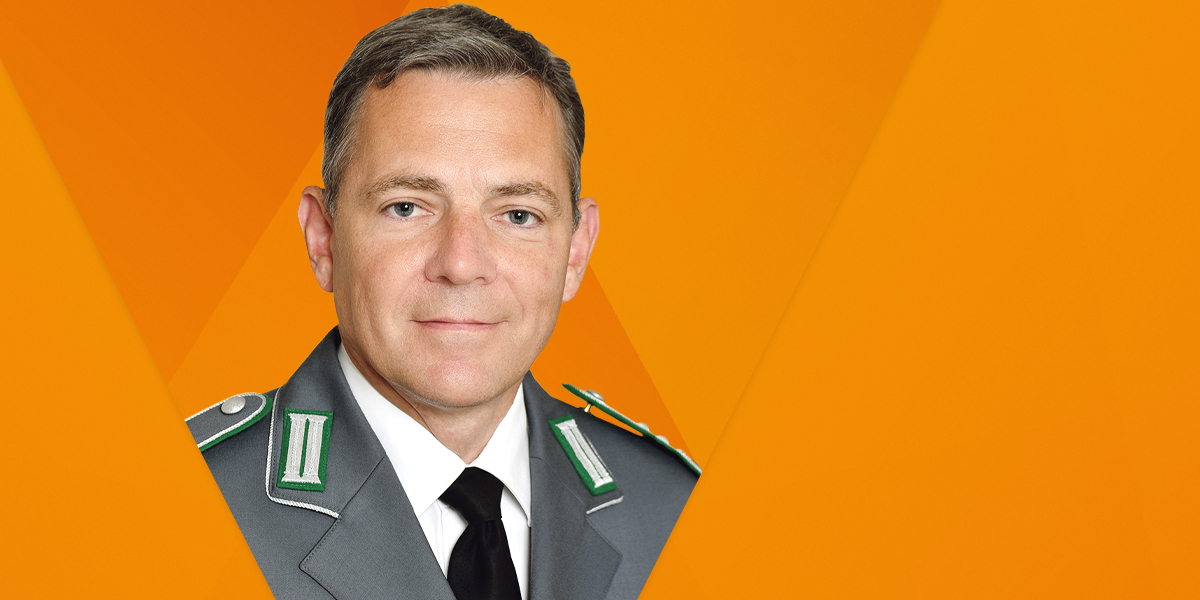
Photo: © Herwig Füreder