Article from the Handelsblatt Journal Security and Defense
Europe is struggling for clarity. The world order has become more complex and noisy. In Washington sits an administration that openly views security policy as a business, clearly tells its allies what it expects, and yet remains unpredictable. Russia is waging a war of aggression against Ukraine, demonstrating daily what it means when borders are forcibly redrawn. Our most important ally and our greatest threat are currently facing each other, closer than Europe would like to believe.
And yet, the United States remains indispensable for our security. Europe will not be able to manage without its capabilities in deterrence, intelligence gathering, and strategic transport for the foreseeable future. Recognizing this does not mean abandoning efforts to increase European capacity for action. Not everything that alarms us is a wake-up call. Some things are merely distractions. Even a clear US security strategy should not throw us off balance.
This is where expectations of Berlin begin. Germany is an economic powerhouse and a political point of reference, but in terms of security policy, it has long underperformed. Anyone who speaks of European responsibility without addressing their own obstacles in procurement, planning, and decision-making is taking the easy way out. Ultimately, what matters is whether investments translate into deployable capabilities: simplifying processes, sticking to decisions, and foregoing nationalistic, high-end solutions.
Common standards are key
In recent years, Europe has begun to adjust its course. Defense is no longer just about coordination, but also about production. The EU is creating instruments to finance joint projects, enable mass production, and strengthen security of supply. However, as long as each member state procures its own variants and sets its own priorities, Europe will remain more expensive and slower than it needs to be. Common standards are therefore key to interoperability and efficiency. We must continue down this path: promoting joint projects, removing obstacles, and creating frameworks that allow member states to equip their armed forces quickly and effectively.
Regarding Ukraine, we Europeans must closely coordinate our support with the US and, at the same time, clearly define the role Europe will play in a future security order. Those who want to have a say cannot wait for others to set the framework, but must contribute their own ideas. For example, European forces could monitor a ceasefire without being permanently stationed in Ukraine. They could be deployed as over-the-horizon forces in neighboring countries and ready for deployment.
Offer less surface area for attack
Security in 2026 will not be determined solely by military equipment, but also by our networks and infrastructure. Sabotage, espionage, and attacks on energy supplies, ports, communication hubs, and government agencies have long been part of our adversaries' repertoire. Europe is responding with stricter requirements for critical infrastructure, shared structures for cyber assistance, and clearer reporting obligations. Crucially, these measures must be effective in everyday practice.
Less visible, but just as crucial for our security, are critical raw materials and supply chains. Whether it's air defense systems, energy storage, or fiber optics: rare earth elements and intermediate products are hidden everywhere, which we have sourced from too few suppliers for far too long. These dependencies represent a potential bargaining chip against Europe. The EU is responding with requirements for diversification, by promoting processing and recycling in Europe, and with faster procedures for strategic projects. This is arduous, but unavoidable.
Europe must follow its words with action.
To ensure the ability to act, politicians must now deliver: above all, honesty and consistency. Honesty about the fact that Europe cannot manage without the US for the foreseeable future, but that it can achieve significantly more on its own. Consistency when it comes to pushing through priorities, even in the face of resistance. For Berlin, this means backing up its claim to leadership with concrete decisions. For Europe, it means focusing less on nitpicking over responsibilities and more on results.
Security policy in 2026 doesn't need grand gestures. It needs partners who deliver quietly but reliably. If Europe focuses on this, it won't become a mere object of foreign decisions in a changing world order, but will remain a capable actor. That's precisely the standard by which we should be judged.
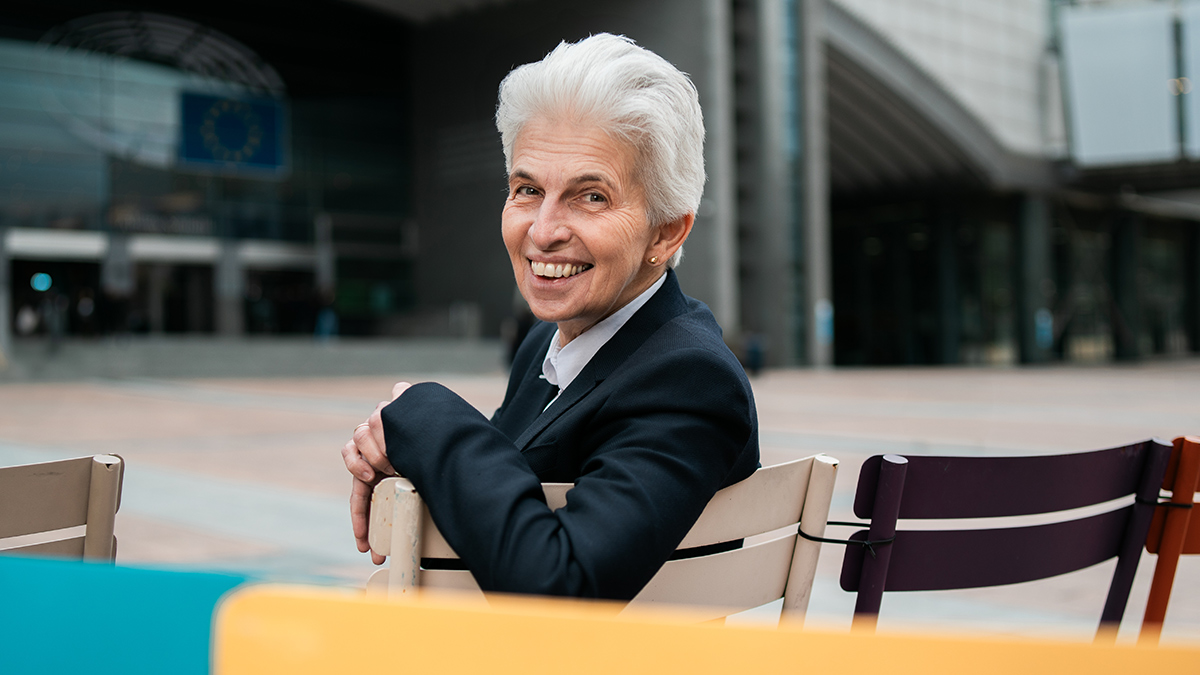
Photo: © James Zabel