
A credible deterrent against aggressors like Russia requires novel, innovative weapons systems. Take hypersonic weapons and corresponding countermeasures as an example. The threat posed by hypersonic weapons, such as the Russian Kinzhal, is already a real one for Ukraine. Therefore, there is a high degree of urgency in integrating new technologies and innovations for defense into our armed forces. The conflict in Ukraine has significantly accelerated the pace of developing new capabilities. As Europeans, we must create the conditions necessary to rapidly deploy these new technologies in our armed forces.
Against this backdrop, the new Innovation Center of the German Armed Forces (InnoZBW) commenced operations on December 1, 2025. The InnoZBW plays a key role in better networking stakeholders from industry, research, and the armed forces. It is also responsible, together with the German Armed Forces, for prioritizing the required technologies and innovations.
A new culture of learning from mistakes is also crucial for accelerating the pace of innovation. The goal must be to discard unproductive solutions quickly, following the "fail fast" principle. Collaborations between established systems integrators in the defense industry and agile startups are also playing an increasingly important role in accelerating innovation.
Likewise, a new pragmatism is taking hold. The requirements of the end user for each new solution are now being critically examined. The notorious "gold-plated solution" with its tendency towards perfectionism is giving way to a solution-oriented approach. Processes from peacetime can hinder a rapid pace of innovation in times of conflict and are being reviewed accordingly.
Germany has created important financial prerequisites with its budget planning for 2025 and 2026. For 2026, expenditures amounting to 2% of the defense budget are planned for research and development, which corresponds to approximately €1.58 billion.
Additive manufacturing as an innovation accelerator
Looking at the USA shows how additive manufacturing is strengthening the development and innovative capacity of the domestic defense industry. For example, Lockheed Martin publicly reports on its activities in the field of additive manufacturing (AM). In November 2024, investments in an AM center were announced. This center utilizes NXG 600E machines from the German manufacturer Nikon SLM Solutions.
Lockheed Martin cites the MAKO hypersonic missile as an application example. According to the company, the missile's control housing and tail control surfaces are additively manufactured. Manufacturing time and costs were reduced by 90% compared to conventional machining processes.
The European defense industry also reports prominent examples of the successful use of additive manufacturing. The Swedish company SAAB Dynamics AB currently uses additive manufacturing primarily in the development of new products to shorten development times and produce more innovative products. As a specific example, SAAB Dynamics cites the tail section of the AUV62, an autonomous underwater vehicle. The use of additive manufacturing enabled a design that saves approximately 501 TB of component weight while simultaneously increasing the system's performance.
The European Defence Agency (EDA) is actively promoting the use of additive manufacturing. The EDA's primary concern is ensuring the supply of spare parts for the armed forces. Additive manufacturing, with its flexibility and digital process chain, offers the possibility of producing spare parts quickly, on demand, and largely locally. Some tenders for the defense industry already include requirements for the additive manufacturing of components.
What role has Nikon SLM played in the defense industry so far?
Nikon is known in Germany as a provider of high-quality cameras and lenses. The company's industrial division is active in many high-tech sectors: semiconductor technology, computed tomography systems, and measurement and laboratory equipment. In 2023, Nikon successfully completed the acquisition of Lübeck-based metal 3D printing specialist SLM Solutions, which has since continued to serve its global customers as a German company based in Lübeck under the name Nikon SLM Solutions.
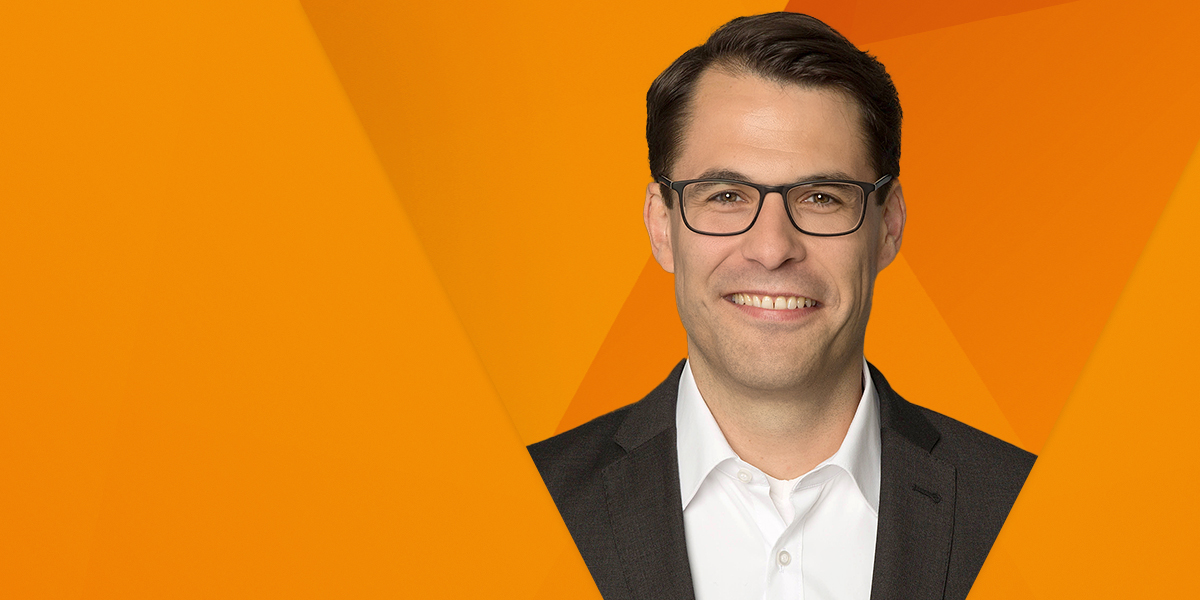
„Our customers in the security and defense industry have played a significant role in our success story. Over the past 10 years, this sector has always been important to us. Our large-format machines, the NXG XII 600 and NXG 600E, are particularly in high demand in the defense and aerospace industries,“ emphasizes CFO Jan-Niklas Thielmann.
Regarding Nikon SLM Solutions' growing involvement in the German security and defense industry (SVI), Thielmann adds: "We are building on a very solid foundation of experience in the defense industry. We are very confident that we will successfully implement our upcoming projects in Europe with strong partners. We look forward to making an effective contribution to scaling our SVI and thus to the security of us all."„
Europe and the Federal Republic of Germany have created the framework for innovation in the national and international security and defense industry. Pioneers are already demonstrating the value of additive manufacturing. It has also become essential for maintaining independent defense capabilities and confidently confronting aggressors through superior technologies. Nikon SLM supports companies like Lockheed Martin and SAAB Dynamics in realizing their innovative advantages through additive manufacturing. For our security of tomorrow.